PH: 0417 632 464
Ross Walter Nutritionist & Naturopath
  • About
  • Contact
  • Treatments
  • Bookings
  • Seminars
  • Articles
  • Programs
  • Resources
  • Members
  • Partners
  • Mentoring
  • Reviews
  • Corporate
  • Media
  • Pathology

GLP-1 Medications – The Real Story!

6/1/2026

0 Comments

 
Picture
I’m sure you have all seen the relentless advertising on social media and other sources, including even in “news” stories, of the latest “science” in weight loss, being the GLP-1 medications of Ozempic, Wegovy, Mounjaro and others. These medications are being prescribed for weight gain and obesity, or type 2 diabetes.

This article will go into detail on these medications, including how they came about, how or if they work, and their controversies and risks. Then you can see if these medications are right for you, or what might be some alternatives.

Firstly, what is “GLP-1”?!

GLP-1 is “Glucagon-like Peptide 1”, or a protein similar to Glucagon, which is one of your main metabolic and digestive hormones (Ohio State University, 2025), particularly of glucose metabolism. Both glucagon and GLP-1 are naturally made in your body, in the pancreas and intestinal tract, respectively (Runge et. al., 2003). Glucagon and GLP-1 act in similar ways in your body to:
  1. Prepare the pancreas for insulin production and secretion following a meal high in carbs
  2. Slows the stomach function
  3. Tells the brain that we’ve had enough food (especially sugar/carbs).

The GLP-1 medications are known as GLP-1 Receptor Agonists. This means that they stimulate the effect of the natural GLP-1 hormone in the body, but for much longer than the naturally-made GLP-1 which breaks down quickly. The medication form of GLP-1 is synthesised with modifications to its chemical structure to the natural form, to allow it to last for, and have its metabolic effects for, approximately 1 week as opposed to just minutes for the natural GLP-1. These medications are administered via a weekly injection.

The GLP-1 medications were originally designed and used for people with diabetes to reduce blood sugar levels. But it was found that people taking the medication lost a significant amount of weight. This lead to people taking the medication for off-label use to lose weight instead. This is why some GLP-1 medications have regulator approval (ie, from FDA or TGA etc) for diabetes, and others are approved for weight loss.

One of the unnamed brands advertising GLP-1 medications in a weight loss program makes the following claims:
  1. Using medications for weight loss is not cheating, but the smartest way! (Once you have read through this document, you should realise that it isn’t the best way at all!)
  2. Weight loss isn’t about willpower, but biology!
  3. 80% of weight gain is genetic, so it’s out of your control! And hence why you should take these medications instead.

This is “marketing”, or also known as “lies”, to get you to buy into their product. None of these points are actually true.
 
How do the GLP-1 medications reduce blood sugars and diabetes?
GLP-1 medications allegedly work by lowering blood glucose levels, and therefore reducing the damaging health effects of glucose on causing weight gain and diabetes. In particular, these medications are prescribed also to reduce the cardiovascular and kidney effects and risks of high glucose levels (Collins and Costello, 2024).
High glucose is normally (ie, without using medications) mitigated by 1) reducing the carbs in your diet, and 2) the production of insulin by the pancreas, which enables the blood glucose to be taken up by your cells. The idea is that in diabetes in particular, the effect of insulin on blood glucose is reduced, so these medications further help the blood glucose levels and balance.
 
How do the GLP-1 medications reduce body weight? (ie, the MOA - Mechanism of Action)

The GLP-1 medications, because they reduce blood glucose, will reduce the effects of excess glucose on causing weight gain. Your excess body fat is just a storage of excess glucose changed into a form called triglycerides, ready for you to use at a future time.

The GLP-1 medications also assist with obesity and perhaps diabetes by suppressing the emptying of the stomach, to keep you feeling fuller for longer which can reduce your appetite and hunger to reduce your intake of food. The medications also prevent the production of another metabolic hormone of glucagon, which prevents the liver from releasing stored glucose (from glycogen), preventing glucose production, increased glucose uptake to the muscles, and increased satiety, all to further reduce blood glucose.

In effect, these medications are forcing you to starve yourself. So of course you will lose weight.
I don’t doubt that these medications work to reduce blood glucose, but then so can reducing the amount of carbs in your diet! Or reducing your response to stress, or doing more exercise, and addressing other root causes and factors to high blood sugar levels or weight gain. If you have tried to lose weight or reverse diabetes but are not getting the results, you haven’t found or fixed all the root causes in your situation.
 
How is GLP-1 made in medications? (ie, Where does the GLP-1 in medications come from?)

The GLP-1 Receptor Agonist medications use a synthetic and modified form of GLP-1, so their manufacturer can trademark and register their medication to prevent other manufacturers copying the medication, and so they can make more money. Manufacturers can’t get a trademark or big profits on natural products.

Hence the GLP-1 in the medications is not the same as the natural hormone. The synthetic GLP-1 in Ozempic for example, came from synthesising a protein found in the venom of a lizard called the Gila Monster! (Science Alert, 2025) This lizard is native to the USA and Mexico.

The synthetic GLP-1 from lizard venom is modified to prevent it being broken down in the body within minutes. Hence it has its effects on your metabolism for much longer than it should.

Are you shocked or concerned that the GLP-1 medications are made from lizard venom?!
 
What are the risks and health issues of the GLP-1 medications? (ie, side effects)
There have been many minor or serious and chronic health issues resulting from the GLP-1 medications, including the following (TGA, 2025; Collins and Costello, 2024):
  1. The most common side effects include nausea, vomiting, and diarrhoea. The loss of fluids and electrolytes from chronic vomiting and diarrhoea will lead to even more nutrient deficiencies and kidney damage
  2. Partial or complete and sudden blindness – by reducing blood and oxygen supply to the eyes
  3. Heart and circulation issues of dizziness, fast heartbeat (tachycardia), and headaches
  4. Increased infections from a reduced immune system function
  5. Development of autoimmune and allergic reactions to the GLP-1 medications
  6. Liver and gall bladder issues, abdominal bloating and pain
  7. Thyroid cancer
  8. Low blood sugar levels
  9. Pancreatitis (inflammation of the pancreas)
  10. Muscle loss – approximately 40% of the weight loss from these medications comes from the loss of muscle. This can cause more health issues from affecting your metabolic rate, causing reduced ability to lose weight, and increased rebound weight gain. In fact, most people gain at least 2/3 of their weight loss within 12 months of stopping these medications. And that weight gain is almost all body fat
  11. Bone loss – a reduced bone density occurs from the chronic nutrient deficiencies caused by these medications. This can occur even in younger people, and can increase the risk of mortality due to bone breakages
  12. Loss of connective tissue – due to the loss of protein and muscle mass, and other nutrient deficiencies caused by these medications. I’m sure you’ve seen people with the “Ozempic face”, especially in celebrities? Thin, gaunt, and emaciated faces are an early side effect of these medications, due to rapid muscle loss and connective tissue loss
  13. Decreased appetite – this is one the main actions or “benefits” of these medications, that they suppress hunger and appetite so you don’t eat as much. Or more accurately, you don’t eat as much crap foods which would have been causing the weight gain and diabetes in the first place… You don’t need a dangerous medication to suppress your appetite – you need a better choice of foods. Did you know there are foods which can suppress your hunger for longer?
  14. Lower energy and fatigue, due to not getting enough nutrition needed to produce energy, and a reduced metabolic rate.

As a result of the number and seriousness of the side effects of these medications, only 27% of people taking them can last 12 months on them (Mozaffarian, 2024).

The Product Information insert for these medications has a “black box” warning, indicating the seriousness of some of these side effects.

Frequent blood testing is recommended if on these medications, to find the above issues, before they become a bigger issue.
 
Are the GLP-1 medications right for you?

No. Never.

But there are some specific issues which would prevent someone from taking these GLP-1 medications including:
  1. People with gastroparesis (delayed stomach emptying), as the medications make this worse
  2. Having inflammatory bowel disease (IBD, IBS, etc)
  3. Having past history or family history of endocrine cancers or thyroid cancer
  4. Having pancreatitis or a past history of this
  5. Having severe kidney dysfunction
  6. Pregnant women are advised not to take this medication, and women of reproductive age or who want to have children are recommended to use contraceptives or stop this medication for a minimum of several months before a planned pregnancy, due to reproductive toxicity and foetal toxicity (including deaths, and deformities)
  7. Women who are breast-feeding should not take this medication, as it has been found in breast milk in animal studies.
 
Legal action from side effects of GLP-1 medications

The GLP-1 medications are so “safe and effective” that there are numerous lawsuits being filed against some of the manufacturers for serious side effects from using these medications (Reuters, 2025).
 
The irony…

In the course of human history, hunger and starvation from malnutrition has been an ongoing issue, even today in many under-developed parts of the world. Malnutrition has been the biggest cause of death ever in humans. These GLP-1 medications promote malnutrition, and so will also promote an early death.

Scientists developed the GLP-1 drugs, not for weight loss or to lower blood glucose levels, but to stop you eating! Eating less leads to starvation, which leads to loss of fat, muscle and bone, and causes chronic nutrient deficiencies and related chronic conditions. This is exactly what happens with these medications. They are not weight-loss medications, but dangerous medications which cause starvation and malnutrition.

The reduced muscle mass will also reduce your metabolic rate, which will forever make it very easy to put on weight again, and extremely difficult to lose it again.

Some reports indicate that one in 8 adults in the USA are taking these medications or have taken them, even though they don’t have diabetes or are obese! (Food and Wine, 2025). This seems to be from the misunderstanding that people can still eat crap, but just less of it, and not get the consequences of the crap diet, such as weight gain and diabetes, or other chronic health issues.

Then there’s the financial cost of these medications… In the USA where you have to pay for everything medical, it can cost up to $16,000 per year to be on these medications (Mozaffarian, 2024). Even if every US adult were eligible for a discounted rate, it would still cost over $600 BILLION, which is more than the cost of ALL other prescription medications combined in the US!

But these medications are not cost-effective, as a study has found that the annual medical costs of those taking the GLP-1 medications actually DOUBLED due to side effects and ongoing health issues (Mozaffarian, 2024).

In Australia with Medicare prescription rebates and PBS subsidies, the cost of the GLP-1 medications is much lower, at around $30-$40 per month if approved and prescribed by your doctor, or $150-$700 privately (ie, not prescribed) (Fugen Health, 2025). The subsidised cost will be taken by the Aus government which will result in a likely massive bill to the taxpayer!

Or you can just improve your diet and lifestyle… for free!
 
In summary

Weight gain and diabetes are metabolic diseases which always have root causes and other environmental/epigenetic factors driving their development and progression. You CANNOT fix those root causes or factors with any medication! And medications ALWAYS cause side effects, as additional or worse symptoms.

Unless you find and fix all the root causes and factors to weight gain or diabetes in YOU, you will not lose weight or reverse diabetes. Weight loss and reversing diabetes is easy, but only with a personalised, holistic, and root-cause based treatment plan.

Your body needs NUTRIENTS to function properly, and for your ongoing health. However, these medications cause a reduced appetite, slower digestion, increased and longer fullness, natural hormone disruption, all of which lead to starvation and many nutrient deficiencies. Starving yourself just to lose weight makes no sense, when it’s at the expense of your health. And because you haven’t fixed the causes of your weight gain or diabetes, you will have the same problems when you stop taking these medications.

Using GLP-1 medications, instead of addressing your root causes, is a very dangerous idea which will rob you of your long-term health. What is the point of losing weight if you won’t have your health to enjoy it?

Are these medications really worth the massive and serious side effects they cause? Of course they aren’t! Especially when there’s better, safer, and cheaper ways lose weight and improving your long-term health!

Sometimes the latest trend or the latest medication is NOT the best way to health.

For further information or alternatives for help with losing weight or reversing diabetes, please see my website (here: www.rosswalter.com.au) or follow my Facebook page (here: https://www.facebook.com/rawnutritionist).

Stay healthy!

 
References:

Collins, L., & Costello, R.A. (2024). Glucagon-Like Peptide-1 Receptor Agonists. Retrieved 3rd January 2026 from https://www.ncbi.nlm.nih.gov/books/NBK551568/

Food and Wine. (2025). 1 in 8 People in the U.S. Has Taken a GLP-1 Drug and Food Brands Are Taking Notice. Retrieved 5th January 2026 from https://www.foodandwine.com/glp-1-weight-loss-drugs-changes-food-industry-8770308

Fugen Health. (2025). GLP-1 Weight Loss Medications: How They're Changing What—and How—We Eat in Australia. Retrieved 5th January 2026 from https://www.fugenhealth.com.au/glp-1-weight-loss-medications-how-theyre-changing-what-and-how-we-eat-in-australia/

Mozaffarian, D. (2024). GLP-1 Agonists – A new recipe for success? Journal of the American Medical Association, 331(12):1007–1008. doi:10.1001/jama.2024.2252

Ohio State University. (2025). How to activate GLP-1 naturally. Retrieved 1st January 2026 from https://health.osu.edu/wellness/exercise-and-nutrition/activiating-glp-1-naturally

RACGP. (2025). Debate over ‘doctor-approved’ weight loss drugs obtained online. Retrieved 2nd January 2026 from https://www1.racgp.org.au/newsgp/clinical/debate-over-doctor-approved-weight-loss-drugs-obta

Reuters. (2025). Lawsuits claiming Ozempic, other GLP-1s led to blindness become second mass litigation over the drugs. Retrieved 2nd January 2026 from https://www.reuters.com/legal/government/lawsuits-claiming-ozempic-other-glp-1s-led-blindness-become-second-mass-2025-12-15/

Runge, S., Wulff, BS., Madsen, K., Bräuner-Osborne, H., Knudsen, L.B. (2003). Different domains of the glucagon and glucagon-like peptide-1 receptors provide the critical determinants of ligand selectivity. British Journal of Pharmacology, 138(5):787–794. DOI: 10.1038/sj.bjp.0705120

Science Alert. (2025). Ozempic Literally Came From a Monster – And It's Not Alone. Retrieved 1st January 2026 from https://www.sciencealert.com/ozempic-literally-came-from-a-monster-and-its-not-alone

Therapeutic Goods Administration (TGA). (2025). Ozempic: Australian Product Information. Retrieved 3rd January 2-26 from https://www.tga.gov.au/sites/default/files/auspar-semaglutide-201030-pi.pdf


You can download this article as a PDF file to keep or share by clicking on the download icon from the menu bar below:
​
Your browser does not support viewing this document. Click here to download the document.
0 Comments

How ironic is it that Diabetes Awareness Month follows from the sugar-fest of halloween?!

9/12/2025

0 Comments

 
Picture
November is Diabetes Awareness Month! This is to raise awareness (and money) to this chronic disease which is still being diagnosed in epidemic numbers around the world, despite all previous awareness days and months and fund-raising for alleged research and treatments.

I find it very amusing and ironic that ONE day after the absolute sugar-fest that is Halloween (or Hell-o-ween?!) on October 31st, with the ridiculous amount of unhealthy treats given out for this alleged tradition, there’s a whole MONTH of diabetes “awareness” which follows! But I’m sure this amusement and irony is lost on so many people.

Diabetes, and especially Type 2 Diabetes, is completely preventable and reversible, despite the advice of the diabetes organisations and charities. An example, from the American Diabetes Association, which claims that Type 2 Diabetes is a problem when your body does not use insulin properly. As such, their recommended “treatments” are focussed on using medications and insulin to treat the symptoms of diabetes, being the high blood glucose levels. They simply do not acknowledge or look at treating the root causes of Diabetes! They also do not really even understand the condition IMHO!

Diabetes Australia claims that Diabetes is again due to poor insulin production, and that there is no cure for Type 2 Diabetes, with mainly a genetic cause as it runs in families even there’s been no known genetic cause found! No, the insulin issues of Diabetes are due to a poor diet of too many carbohydrates (sugary foods and drinks, grain based foods, fruit, and alcohol). A high carbohydrate diet causes higher insulin production, and over time can wear out the pancreas (the organ which produces insulin), leading to higher and higher blood glucose levels, which leads to diabetes, and its other issues of chronic inflammation and oxidative damage, high blood pressure and heart issues, obesity, and other health issues.

People within families tend to eat the same cr@ppy foods and have the same cr@ppy lifestyle, which can be common causes and risk factors for diabetes. So what may appear to be genetic is not at all!
Diabetes Australia recommends eating lots of carbohydrates (!) and less fat to control your diabetes, which is completely the opposite of what you should do! Healthy fats in foods will better balance your blood sugar and energy levels, prevent sugar cravings, and cause absolutely NO insulin response from the pancreas!

Similar to other chronic health conditions I’ve seen in clinical practice, there is no one root cause to Type 2 Diabetes. While a high carb diet IS a major root cause to Diabetes, there are always other root causes and contributing factors too, which can be different in each person. Unless all the root causes to Diabetes in each person are identified and treated, the Diabetes can’t be reduced or reversed.
It's about time that the diabetes organisations in Australia and around the world started advising the public based on 21st century scientific advice on diabetes prevention and treatment, and not 1960s garbage science that they still promote. This is about peoples' lives and that of their families, and not about maintaining profits for the diabetes organisations and the food companies they are in bed with.

We also need to better educate our children in good nutrition, and set good examples as adults too. This includes boycotting stupid and unhealthy traditions like Halloween and its dangerous sugar-fest. It’s not just about a one treat day per year, as those unhealthy treats often last days or weeks, and children are exposed to these multiple times per year, or very regularly in many cases. And we wonder why Diabetes hasn’t gone away…

Because I focus on finding all the root causes and factors contributing to Diabetes in each person, I get very quick and long-lasting results! If you or someone you know has Diabetes, or even pre-diabetes, I’d be happy to help stop further progression, and start to reverse this and get you back to health again!


References:

American Diabetes Association. (2025). Understanding Type 2 Diabetes. Retrieved 3rd November, 2025 from https://diabetes.org/about-diabetes/type-2

Diabetes Australia. (2025). Type 2 Diabetes. Retrieved 3rd November, 2025 from https://www.diabetesaustralia.com.au/abo.../type-2-diabetes/

Image by Holiday Scenes on StockSnap
0 Comments

Let's end diabetes by addressing its root causes!

9/12/2025

0 Comments

 
Picture
Further to my previous post with November being Diabetes Awareness month, the 14th November is apparently World Diabetes Day, to raise awareness of the condition of diabetes, and to get more funding for the diabetes associations for research into this condition.

Why? When we already know what causes the main form of diabetes (being Type 2), and how to reverse it! (Type 1 symptoms and effects can be greatly reduced and insulin requirements reduced).

​Type 2 Diabetes is a metabolic condition where blood sugar levels are constantly high due to dysfunctional hormones such as insulin, leptin, glucagon, and ghrelin and others. The body no longer responds correctly to these hormones. High blood glucose is very inflammatory and damaging to the body, especially to the blood vessels (causing atherosclerosis, high blood pressure, high cholesterol, skin ulcers and loss of blood supply to lower extremities, poor wound healing), damaging the nerves (causing loss of sensitivity and feeling in extremities), eye conditions, kidney damage, liver damage and more.

These are factors and the result of Diabetes, but not the cause of the condition. So what does cause Diabetes?

There is no single cause to Diabetes, but a combination of factors, which can be a different combination in each person.

Some of the possible root causes and factors in Diabetes include the following:

- High carbohydrate diet, causing consistently high blood sugar levels
- Insulin resistance, as a result of the chronic high blood sugar levels
- Low protein and low fat diets, because you’re eating too many carbs
- Many vitamin and mineral deficiencies, which are needed to make insulin or other hormones for regulating blood sugar levels
- Low salt diets, causes insulin resistance
- Poor lifestyle, typically a sedentary one, so you don’t use the blood sugar for physical activity
- Poor sleep quantity and quality
- Poor sun exposure, low vitamin D, and/or excess exposure to artificial lighting
- Heavy metals toxicity
- High chronic inflammation and oxidative damage, from a number of causes and sources, especially causing damage to the pancreas, to reduce insulin production and secretion
- Low thyroid function
- And more!

But diabetics are usually just told to eat less fats and more of the very thing which causes high blood sugar - carbs! Why? Because the diabetes associations around the world are sponsored by food industry companies, such as grain companies, cereal producers, and other packaged and processed foods, to maintain their profits. The same food industry companies also sponsor the dietitians' associations around the world, so those associations will promote their products. In some countries, such as in Australia, the Dietitians Association of Australia actually wrote the government food guidelines, again favouring food industry companies' products. This is why these mostly high carb foods are promoted for everyone, and especially for diabetics. Such advice will make your health worse.

I have reversed type 2 diabetes in people who have had the condition for years, often in a few weeks! In some, their fasting blood sugar readings dropped into the normal range within a few days! All because of getting the right scientifically proven nutrition advice and some lifestyle changes, in an easy to follow treatment plan.

If you have diabetes or someone you know does and hasn't been able to improve their symptoms in a few weeks, then I would love to help! Type 2 Diabetes is completely reversible! But it needs to be treated by someone who understands the condition and who focuses on all the root causes in each person, and not by someone who wants to just "manage" the symptoms. Make a decision to reverse type 2 diabetes today, and improve your quality of life!

Stay healthy!
0 Comments

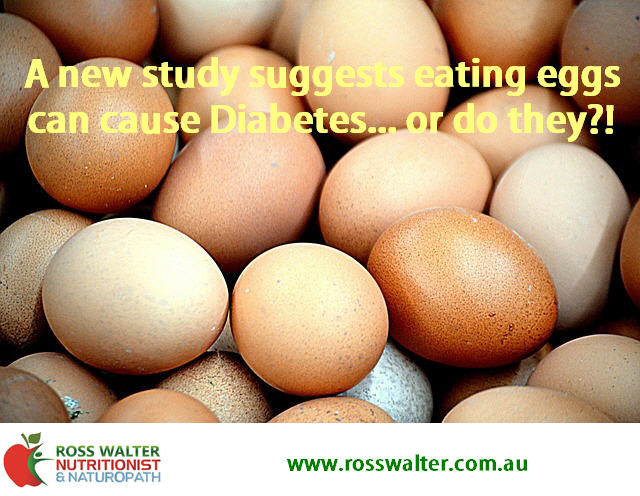
Eating eggs found to be linked to causing diabetes, or do they? (Why you shouldn't believe all you read in the media!)

4/12/2020

0 Comments

 
Picture
Just because you see a new "science" article in the news or media, or even in a published study, doesn't mean it is true, accurate or believable.

Here's yet another example...

Just days before World Diabetes Awareness Day, a new study has been published linking the consumption of eggs to diabetes!

The very first line in the study states "the association between egg consumption and diabetes is inconclusive"! So they set about trying to find an association between eggs and diabetes. They performed this "study" by looking at one to seven 3-day diet diary in Chinese adults only.

The researchers and authors didn't even elaborate on which type of diabetes they were talking about in the study! No mention if it was Type 1, Type 2, Type 3 or others...

Their results found a higher egg consumption was associated with an increased risk of diabetes. Note that NO cause was actually proven! They provided no scientific basis or biochemistry to prove that eggs cause diabetes.

The study found:
• Chinese people are having a higher than global average incidence of diabetes at 10.9% of the population, as compared to 9.3% globally
• The costs of diabetes-related health expenditure in the US alone is $760 billion, and $109 billion in China
• Prevention of diabetes is very important - they got that bit right!
• Eggs provide protein, carotenoids (vitamin A compounds), arginine (an amino acid) and folate. What about all the healthy fats they missed, or the complete amino profile?!
• The authors were concerned about the high amount of cholesterol in eggs, being linked to an increased risk of diabetes by impairing insulin secretion (!). Many other studies show tha cholesterol is not the cause of heart disease or diabetes at all!
• Other studies of egg consumption being linked to diabetes had mixed results - some showing no association, some showing a small association and others were inconclusive
• A higher intake of eggs is accompanied by higher red meat consumption in US studies, which is associated with diabetes (!). No it's not...
• The study found that there was also a higher risk of diabetes due to age, being female, living in an urban area, having a higher income, having a higher weight or obesity, high blood pressure, eating "modern" meals (fast food, milk, egg, and deep fried food). Yet the authors lay the blame entirely on eggs!
• Diabetes was not associated with eating traditional meals (rice, meat and vegetables), smoking, alcohol consumption (!), vegetable consumption, or protein consumption!
• The study looked at other studies of egg consumption with diabetes and found a higher egg intake was associated with a higher intake of modern foods (as opposed to traditional foods), snacks, sweets, desserts, and refined grain products. They said that these high carbohydrate foods can increase the workload on the pancreas and cause insulin resistance (which is diabetes!).

This is a good example of a study going out to hunt for a particular biased conclusion and finding one. In scientific terms this is called a "confirmation bias" - finding an outcome that support one's prior opinions. And also a good example of the same study ignoring other more obvious conclusions or causes, and not actually proving any biochemical causation of eggs causing any health issues. Studies based on food questionnaires or surveys, especially about what one ate years ago, are highly inaccurate and no meaningful scientific outcome should be read from studies like this.

Eggs are a health food! They contain 35% protein and all amino acids, together with 63% healthy fats of a variety of types, and just 2% carbohydrates (Nutrition Data, 2020). Considering that type 2 diabetes is a chronic disease of excess carbohydrate intake, causing insulin resistance, high blood glucose (ie sugar!) levels, and inflammation, eating a food like eggs that is just 2% carbohydrates is NOT going to cause diabetes!

This study ignored all the other high carbohydrate causes of diabetes, and lifestyle factors too, such as stress. Don't blame eggs for what the toast, bread, grains, sugar, juices, sugary drinks, and alcohol (all being high carbohydrate foods) are doing to cause type 2 diabetes!

Don't get your nutrition advice from the media! Speak to a professional who can see through the bias in many studies and other poor nutrition advice. And keep eating eggs!

Stay healthy!


References:
Nutrition Data. (2020). Egg whole raw fresh; Nutrition facts and calories. Retrieved 16th November 2020 from https://nutritiondata.self.com/.../dairy-and-egg.../111/2
​

Yue Wang, Ming Li, Zumin Shi. (2020). Higher egg consumption associated with increased risk of diabetes in Chinese adults – China Health and Nutrition Survey. British Journal of Nutrition, 1. DOI: 10.1017/S0007114520003955
0 Comments

World diabetes day 2020 - Diabetes can be reduced naturally

4/12/2020

0 Comments

 
Picture
Picture
Picture
Picture
Picture
Today is apparently World Diabetes Day (November 14, 2020), to raise awareness of the condition of diabetes, and to get more funding for the diabetes associations for research into this condition.

Why? When we already know what causes the main form of diabetes (being Type 2), and how to reverse it! (Type 1 symptoms and effects can be greatly reduced and insulin requirements reduced).

Type 2 Diabetes is a metabolic condition where blood sugar levels are constantly high due to dysfunctional hormones such as insulin, leptin, and ghrelin and others. The body no longer responds correctly to these hormones. High blood glucose is very inflammatory and damaging to the body, especially to the blood vessels (causing atherosclerosis, high blood pressure, high cholesterol, skin ulcers and loss of blood supply to lower extremities, poor wound healing), damaging the nerves (causing loss of sensitivity and feeling in extremities), eye conditions, kidney damage, liver damage and more.

The Diabetes associations worldwide and most dietitians are in denial about what causes diabetes! They blame dietary fat for making people fat, which can lead to diabetes, so they claim. So they tell diabetics to eat more carbohydrates - mainly grains and grain products (breads, cereals, muesli bars, pasta), rice, oats, fruit juice etc.

But it's these CARBS which cause high blood sugars! It's the constant intake of high carbohydrate foods which maintains, prolongs and worsens the symptoms of diabetes, NOT dietary fats! Healthy fats in your diet do NOT raise your blood sugars, nor cause in insulin response. Hence fats do not cause insulin resistance, nor cause diabetes!

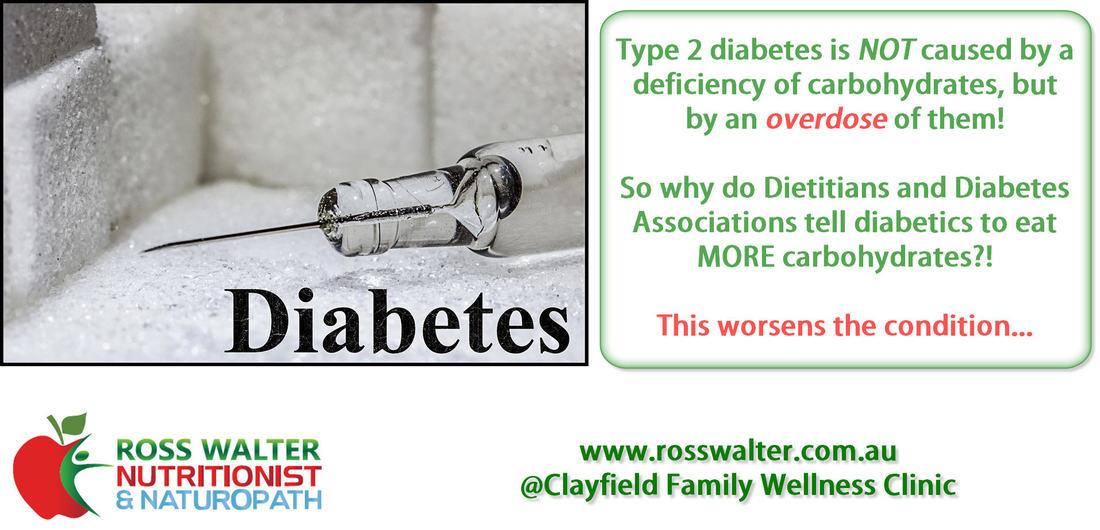
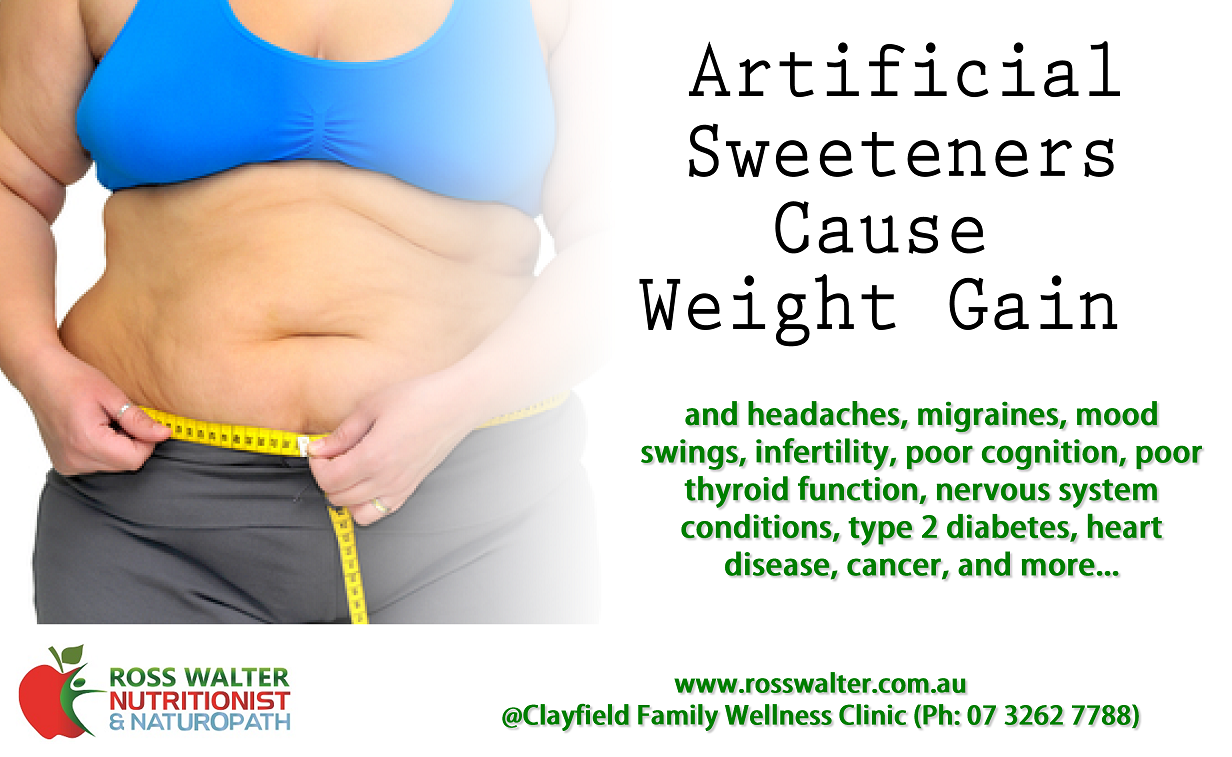
But diabetics are told to eat more of the very thing which causes high blood sugar - carbs! Why? Because the diabetes associations around the world are sponsored by food industry companies, such as grain companies, cereal producers, and other packaged and processed foods, to maintain their profits. The same food industry companies also sponsor the dietitians' associations around the world, so those associations will promote their products. In some countries, such as in Australia, the Dietitians Association of Australia actually wrote the government food guidelines, again favouring food industry companies' products. This is why these mostly high carb foods are promoted for everyone, and especially for diabetics. Such advice will make your health worse. See some of the attached pics fpr examples of high carb foods being promoted for diabetics.

I have reversed type 2 diabetes in people who have had the condition for years, often in a few weeks! In some, their fasting blood sugar readings dropped into the normal range within a few days! All because of getting the right scientifically proven nutrition advice and some lifestyle changes, in an easy to follow treatment plan.
​
If you have diabetes or someone you know does and hasn't been able to improve their symptoms in a few weeks, then I would love to help! Type 2 Diabetes is completely reversible! But it needs to be treated by someone who understands the condition and who focuses on the root causes, and not by someone who wants to just "manage" the symptoms. Make a decision to reverse type 2 diabetes today, and improve your quality of life!
0 Comments

"The Magic Pill" documentary review

8/6/2020

0 Comments

 
Picture
On Monday 31st July 2017, I was invited to attend a private screening of the new food and nutrition documentary "The Magic Pill", and be an expert on the panel afterwards to answer health and nutrition questions from the attendees.  Perhaps the title is a little vague at first, but the message becomes clearer as you progress through the film, produced by Rob Tate and Pete Evans (Australian celebrity chef and Paleo nutrition advocate).

The film introduces us to several people of differing ethnicity and their families, and a warts and all look at their health issues, medications, and their concerns about their health. We looked at Caucasian Americans, African Americans, Native Americans, and a large community of Indigenous Australian Aborigines in Arnhem Land. All had many chronic diseases, including many "20th Century conditions" of over-consumption, including type 2 diabetes, heart disease, high blood pressure, obesity, liver and kidney disease, asthma, and cancer. We also followed the stories of a young girl and boy with severe ADHD and intellectual development issues who were non-verbal and showed a lot of typical behaviours of being on the autism spectrum, which was very stressful for their families.

The Yolgnu people in Arnhem Land were particularly interesting, as they recalled their parents and grandparents all being very fit, strong, having great teeth and in excellent health while living their traditional ways and foods. Then white man came with their western/modern foods. They were now living on "modern" foods of breakfast cereals, breads, damper, jam, orange juice and coca cola... As a result, their health was very poor, life expenctancy very low, and they couldn't see how they could change this.

But along came a charity called "Hope for Health" with selfless health professionals with a program which incoprorates their traditional medicine and diet, exercise, detox retreats, nutrition and cooking workshops and support. In a few short weeks, they turned their health around and this gave them hope! You could see the relief and improvements in their eyes and faces again, and it was beautiful to see! For more information on this charity and their work, please visit https://www.hopeforhealth.com.au/ and consider a donation to help these wonderful people.

A brief section of the film showed similar health issues with Native Americans eating the same modern foods introduced by white man.

It was obvious that the "modern" food pyramid and government food guidelines does not work for everyone (or "anyone", it could be argued), especially indigenous populations. One reason that the guidelines are not working is due to the huge amount of influence the food industry companies have in these guidelines, through "sponsorships" of various health advisory groups, and their deliberate funding of biased "research" simply confuses the public and maintains the current situation. These sponsorships are openly listed on their respective websites.

From my experience in clinical practice (as a Nutritionist and Naturopath), people from non-Western ethnic backgrounds improve their health so much by returning to their traditional diets, which typically includes plenty of seasonal vegetables, some fruits, organ meats, grass-fed/wild caught meats and healthy fats - eggs, nuts and seeds, and the occasional fast. This became the theme and purpose of the film - to educate and empower people to return to health using traditional nutritional medicine and cooking techniques, while avoiding the health dangers in processed foods.

Various scientific, medical and nutritional experts were interviewed and contributed to the film, including Dr David Perlmutter ("we should eat natural foods, not scientised foods"), Dr Rangan Chatterjee ("the question that all doctors should ask patients is 'what are you eating?'"), farmer Joel Salatin ("90% of cattle in the USA are fattened up in feedlots, being fed GRAINS" - yet they are supposedly healthy for us?!, and "a sick environment causes sick crops, which causes sick animals, which causes sick humans who eat them"), South African scientist Professor Tim Noakes (the South African dietetics association filed a complaint against him for giving Low Carb High Fat diet advice, but he won, due to the amount of scientific evidence supporting the LCHF model ), and more.

There was a short section of the documentary showing charts and statistics of the benefits of a LCHF or ketogenic type diets to reduce weight, and reverse many of the modern diseases mentioned earlier. The weight of scientific evidence shows that the current food guidelines is contributing to the chronic disease epidemic we have now, and perhaps the food pyramid model should be turned upside down, so that meats and healthy fats are the main part of our diets, instead of grains.

I do not agree with the current food guidelines (which is quite disappointing as a Nutritionist, but it is a decision based on evidence), and I recommend a similar food model for my clients, being a "low inflammation" nutrition program, which is a slight variation of the LCHF/ketogenic/Paleo model. I don't believe, however, that a high intake of meat/protein or healthy fats should be the most consumed food group. Vegetables should be - preferably raw, fresh, seasonal and organic as much as possible for their wide nutrient content. Grass-fed meats and "healthy fats" (not so much "High Fat", which is open to abuse or extreme diets) should come next, with processed or refined carbohydrates such as sugar, grains and grain products coming a distant last in quantity, or even avoided (as there's no nutrients in grains which can't be obtained from other food groups!).

A LCHF/Ketogenic diet can reduce chronic disease symptoms by reducing inflammation, reducing cholesterol and blood sugars, and normalising blood lipid levels and the body's response to insulin. These changes can help to reduce weight, reverse type 2 diabetes, improve mental health, reduce autism symptoms (both children became vocal, more responsive and better behaved in a few short weeks!),  greatly reduce or even eliminate the need for insulin for T2 diabetics, improve energy, improve brain function and cognition, and reduce many other chronic disease symptoms!

We saw all of these improvements start in a few days in the family members being followed in this documentary, and they kept on getting better at each checkup a few weeks and several months after incorporating the dietary changes. It was heartwarming and wonderful to watch the improvements, to see and hear their reactions, and their need for less medications which neither helped improve their health nor reduced their symptoms.

If you are interested in food, health, nutritional medicine, or wanting to reduce your chronic disease symptoms, please have a look at this film! I recommend watching  for its emotive, educational and empowering message, that nutritional medicine can be "The Magic Pill" to many of our current health epidemics many people are dealing with personally. If the movie can inspire just one person that there is hope in having better health and a better quality of life, the film has achieved its purpose! Many thanks to all those involved in the film, for raising awareness and hope in many!

Once you are ready to make some changes yourself, please consult with an experienced Nutritionist or Naturopath to help personalise a plan for you, as your current health conditions, lifestyle, medications and other factors may need to be taken into account. I'd love to help you achieve your health goals!

"The Magic Pill" is available to watch on Netflix. Please look out for this, as I highly recommend watching it! 
​
Good health to you!

0 Comments

Diabetes organisations and educators cause more diabetes

21/3/2019

5 Comments

 
Picture
Today I attended an all-day seminar on "carbohydrate counting for health professionals" run by Diabetes Queensland". Except that I didn't quite last the whole day, as partly due to the idiotic information being given, but I had afternoon clients booked in to save me from listening to any more drivel!

I partly wanted to attend to see where Diabetes Qld are up to in relation to actually preventing or treating diabetes, and perhaps spare some of the attendees from the one-sided propaganda which they give. I found that Diabetes Qld are still stuck in 1960s nutrition science, and luckily there were not many attendees who needed saving.

Three of the 7 in total attendees were pharmacists, two dietitians of limited experience, and two rebels - myself and a low-carb advocate blogger friend who went along for similar reasons as myself. A pretty poor turnout really, but perhaps just as well!

The first thing which annoys me are diabetes educators - the diabetes association runs training courses to educate health professionals to advise and help people with diabetes, but this actually makes it all worse. There are limited health professionals who can take the diabetes educator training, and fewer who can actually get the qualification. Doctors are allowed to become DEs, as are pharmacists, nurses, physios, podiatrists and not a lot more. How many of these professionals have any nutritional medicine training or experience? NONE! Yet they are allowed to give nutrition advice on the fastest-growing nutrition-related chronic health condition in the world today! Dietitians can also become DEs, but at least they have *some* nutrition training, even if much of it is wrong. Nutritionists and Naturopaths (like me) cannot take the DE training, and we can't get the qualification or qualification, despite our more current nutrition science training and experience!

I'm still confused as to the meaning of the seminar! It was about "carb counting", but instead of (as I had hoped) counting carbs to LIMIT their intake, and thus reduce blood sugar levels and insulin response (which diabetics need to do), the purpose was to count carbs to INCREASE their intake - which is precisely the opposite of what should happen.

They introduced a new concept of "carbohydrate exchange", to attempt to simplify counting of carbohydrates in terms of grams or calories. They instead recommend counting carbs in blocks of 15gm as "1 exchange" of carbs, so 2 exchanges means 2 x 15gm = 30gm carbs. That was the only "new concept" but I'm still confused as to 1) why, or 2) how this will improve a diabetic's health?!

Some other gems I was told in the seminar:
1) Non-starchy vegetables and some fruit don't count as carbs at all. No need to count them!
2) Diet soft drinks and diet cordials are non-carbs too and are "fine", despite them being linked to actually causing weight gain, diabetes and cancer (which I pointed out)
3) Starchy foods - potato, rice, pasta etc are needed as they "fill you up more"! (Maybe, but not as filling as protein or healthy fats, which give a longer lasting energy)
4) 10% of your daily dietary intake as sugar is fine (12 tsp)
5) Your dietary intake of carbs must not fall below 130gm per day!
6) Dietary fat influences blood glucose levels! NO it doesn't!
7) I was told that alcoholic drinks shouldn't be included in counting carbohydrates! And alcohol can LOWER blood glucose overnight - no it doesn't! And alcohol is "potentially a low-GI snack before bed"! huh?!
8) Despite Diabetes Australia releasing a "position statement" on using a low-carb plan for treating type 2 diabetes, as there is a LOT of published science showing it works, they aren't ready to commit to this yet and they want more studies done
9) But in the next sentence, low carb was bad again, as our muscles and brain can only run on glucose (sugar) - complete BS! (I said this was wrong, but they didn't accept it)
10) Dietitians and DEs shouldn't tell people that they can't have this or that food!
11) Diabetics need to eat more carbs UP to their insulin requirements! (No, they need to reduce carbs to reduce insulin...)
12) "Fad diets are those that cut out certain foods or food groups" and are not recommended! I asked, "according to that definition, vegetarian and vegan diets are fad diets and should also be ignored?"!
13) Counting carbs with the new "exchange" method has been shown to reduce HbA1c (a diabetes pathology test marker) by up to 2% over a couple of month period. I said "I've reduced HbA1c in a type 2 diabetic client by 20% in 2 weeks using a low carb plan..." and they looked shocked and angrily reminded me that we are learning about "counting carbs" not "low carb", ok?!
14) There was a lot of contradictory information being given. And even simple little things like "fats and oils and protein don't have any carbs", meaning that they won't cause high blood sugars is ignored in their "treatment". They seem blind to the obvious
15) Saturated fats and cholesterol are still bad as they cause heart disease! No they don't! The two rebels put forward a few comments on this against the speaker who said "we will agree to disagree"...
16) 
In the past, diabetes was treated by doctors with a "NO CARB" diet! That was, until 1921 when insulin was discovered! After this, a "LOW CARB" diet was recommended for diabetics, and there was a much lower rate of diabetes! (Now we have an epidemic of diabetes as a result of people being advised to have a HIGH CARB diet instead! Why can't they see this connection? Is it from diabetic retinopathy?!)

Amusingly, there were lollies on the tables, we had to count carbs for a range of processed and packaged crap foods (breads, crackers, cereals etc), NONE of which I either buy or recommend to any clients, morning tea was a carb fest of bakery products and fruit (more carbs), and lunch was not much better. I hope I sowed a few seeds of doubt in the heads of those who attended, as they clearly had no idea about nutrition or how to actually help diabetics, which was why they were there.

It's also very sad and disturbing too, that a high profile health organisation is in complete denial about the causes of diabetes, and current evidence-based treatments. Sure I understand it's difficult to change your mind on an entrenched belief, but at some stage you need to bite the bullet and say "sorry, we got it wrong" and move on, to help people with their health. This is about peoples' lives that are at stake here, it's not just about sponsorship money. It's about real people, and their families. Wake the hell up Diabetes Queensland/Australia.

Treat diabetes with current scientific treatments - see an experienced Nutritionist and/or Naturopath instead. 
5 Comments

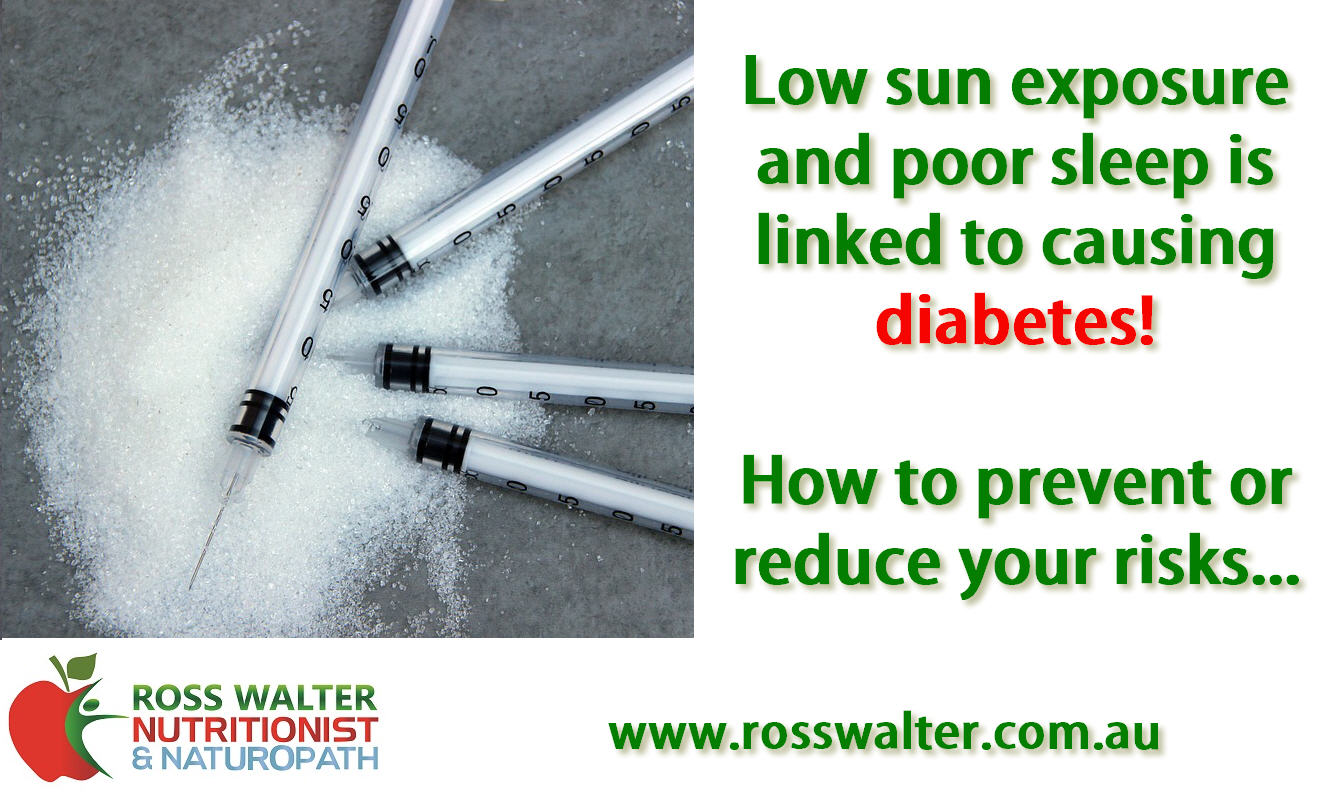
Diabetes linked to low sun exposure and poor sleep

20/11/2018

0 Comments

 
Picture
In this article I will be looking at the relationship between low sunlight exposure, sleep and weight gain and diabetes. You might not think that these topics are related, but they are!

For good quality sleep, you need to make enough melatonin, also known as the sleep hormone. This is dependent on multiple factors, such as sufficient nutrient intake, good digestion and absorption, sufficient sunlight exposure during the day, and other factors.
Melatonin is also an anti-inflammatory and antioxidant hormone, and can reduce blood pressure, reduce cholesterol, reduce anxiety, reduce pain, and interestingly, reduce blood sugar levels! Many studies show there's a link between poor melatonin levels and poor sleep quality and altered insulin secretion and diabetes! This is likely the result of melatonin receptors on the surface of the insulin-producing cells in the pancreas, meaning that the cells which produce insulin actually respond to melatonin!

Melatonin actually reduces the secretion of insulin! Melatonin is only secreted at night when your eyes sense the levels of sunlight diminishing, and this causes you to secrete less insulin which would otherwise reduce your blood sugar levels. Insulin is a "fat storage" hormone, as it tells the cells in the body to take up the glucose in the blood and use it for energy, but it also tells the liver to convert the excess blood glucose into fat so it can be stored. Hence why high carbohydrate diets lead to increased fat storage and increased weight.

The other part of this picture is that high production and levels of insulin are found during the day, when melatonin isn't secreted (due to bright sun exposure). High levels of blood sugars are very damaging to the body, which over time leads to inflammation and diabetes, and all their complications of hormone imbalance, loss of feeling in extremities from nerve damage (peripheral neuropathy), and kidney and eye damage, and heart disease. If you have diabetes, melatonin secretion in the evening will reduce insulin production, so your blood sugars will remain high all night to cause inflammation and damage. You don't want this!

Melatonin doesn't just help you sleep, but it balances your blood sugars and can help to prevent and reverse diabetes! Insulin production also appears to have more of a priority over melatonin production, so a high carbohydrate diet causes more insulin production and less melatonin, causing sleep disturbances!

I have noticed this with my clients, and I have had great success in reducing diabetes symptoms of high blood sugars and insulin levels mainly by improving their diet at dinner time! Reducing carbohydrates in the evening meal reduces blood sugar levels, which in turn reduces the need to produce more insulin, which results in more melatonin being secreted to improve sleep! In addition, the decreased need for insulin reduces the strain on the cells of the pancreas to make insulin, reduces insulin resistance, and lessens the risk of non-insulin dependent type 2 diabetes turning into insulin-dependent diabetes (ie needing insulin injections).

If you want to prevent diabetes or to reduce diabetes, you must reduce your refined and processed carbohydrate intake at dinner! Remember the "no white (foods) at night" rule! That's no wheat (ie bread, pizza etc), pasta, potato, rice, sugar (ie desserts, ice cream), or alcohol! Harsh I know... but you'll feel better for it and you will sleep better too!
​

0 Comments

Low carb diets for Diabetes - does it help?! YES!

22/8/2018

0 Comments

 
Picture
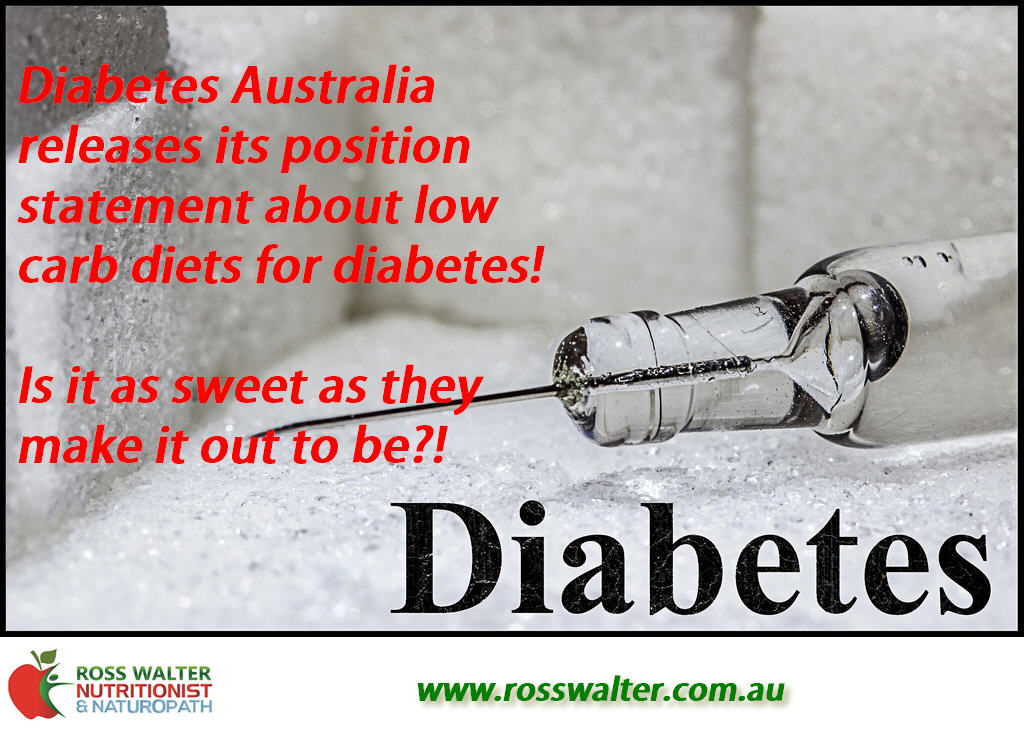
Today (August 21, 2018) Diabetes Australia released a "position statement" to make some loose recommendations or advice to people with diabetes using a "low carb" eating plan to better improve their health.

I have gone over their position statement and this is my review...

Firstly, what is Diabetes?! Diabetes is caused by your food intake being too high in refined and processed carbohydrates, which causes high blood sugar levels. Over time, your cells start ignoring the insulin signal so your blood sugar levels remain high. More and more insulin is produced, as your body is now "insulin resistant", until your poor pancreas organ effectively wears out, and now you have diabetes. All caused by a high carbohydrate diet.

So a lower carb eating plan would seem to be the obvious solution! Many independent and evidence-based Nutritionists and Naturopaths (like me!) have been saying this for many years! Low carb for diabetes has been researched and recommended since the 1920s, but not by the diabetes organisations.

Some notes of the "position statement" are:
1) Diabetes Australia say that there is no "one size fits all" approach to "living well with diabetes". Absolutely true! So why have they been using a "one size fits all approach" for decades?! Eat less fat, less salt, follow the food guidelines, and take this insulin and medication. This doesn't fix diabetes, but only makes it worse.

2) There are many reminders that someone with diabetes should speak with their dietitian BEFORE considering going low carb. Why work with someone who hasn't actually fixed the problem in how long?

3) Dietitians are not allowed to recommend a low carb diet for any condition, as it's against their rules. The reason why is explained later... So if you have diabetes and want to try low carb, you speak to your dietitian, who will just say - "you shouldn't do that" and "eat more grains", which are high in carbs, which causes high blood sugar, which causes more insulin resistance. Pass those diabetes meds please.

4) They are still suggesting that healthy fats should be avoided because of their risk to heart disease - an issue which hasn't been proven in thousands of published studies in decades...

5) People starting a low carb diet will experience tiredness, headaches, nausea and dizziness. Really?! Not in my experience in a low carb plan - in fact, the chronic headaches and migraines disappear within days of starting low carb, and nausea and dizziness reduces too, as does your weight, blood sugar level, cholesterol level, symptoms, and many other "side effects"!

6) They claim low carb diets are popular because they are easy to follow and are heavily promoted in the media! NO! Because there is a lot of very good research showing that they work amazingly well for people with diabetes, weight issues, heart disease, cancer, and many other chronic health conditions!

7) They do say that there is "reliable evidence" (hooray!) that "lower carb" eating can be "safe and useful in lowering blood glucose levels"... Great! Then they add "in the short term (up to 6 months)" but only because they didn't include any studies in their position statement which went longer than this.

8) They didn't consider "vegetables " as being "carbs", when they are. But a "low carb" plan doesn't mean eating less or no veg! Low carb means low refined carbs like sugar, grains, grain products and alcohol, as all of which greatly raise blood sugars and insulin response.

9) They included 3, yep, just 3 pathetic studies to show that low carb wasn't proven to be of benefit in type 1 diabetes, and the most number of people tested in the 3 tests was 45 people. Another 3 studies used for type 2 diabetes. Hardly good examples, when I can find more and better quality studies showing much better benefits for diabetes.
10) AND their definition of "low carb " is diets with no more than 130gm of carbs per day. That's NOT a low carb diet! That's a MODERATE to high carb diet! We don't consider a diet to be low carb unless it's less than 30-50gm of carbs per day. No wonder they didn't get the really good results of reduced blood glucose and HbA1c (a diabetes blood sugar marker test) than I've seen in practice!

In summary, at best, Diabetes Australia are saying, you MAY be able to do a "moderate carb" diet (because it sure isn't low carb!) for up to 6 months maximum, only if you aren't pregnant, a child, breastfeeding, those who are malnourished (including those with cancer, infections, heart disease, and osteoporosis), with liver or kidney failure, eating disorders, on diabetes medications, or if you are a dietitian or diabetes consultant!

ALL of these conditions are ideal for a low-fat and highly nutritious eating plan! All of these health conditions will greatly improve from eating less sugar, grains and starchy foods.

Despite the position statement and its attempt at trying to stop the public criticism against their outdated advice for diabetics, the Diabetes Australia website still has the same old poor advice. The same with the Dietitians Association of Australia. "People with diabetes should follow the Australian Dietary Guidelines", whose high-carb advice caused the diabetes in the first place, because the guidelines were written by the Dietitians Association of Australia, who in turn are sponsored by many food industry groups, and processed food maufacturers like Campbells, Arnotts, Nestle, the Australian Breakfast Cereal Manufacturers Forum (ABCMF), and more! It says so on their website!

Now do you see why we have this epidemic of obesity, diabetes, and other chronic diseases?  Nothing is going to really change until the DAA is either replaced, or they start giving factual nutrition advice based on real science, and not on corporate "sponsorships".

Nothing new to see here, move along now...


0 Comments

DIABETES: WHY DOES THE USUAL TREATMENT MAKE IT WORSE?

5/12/2017

0 Comments

 
Today is apparently World Diabetes Day (Nov 14), to raise awareness of the condition of diabetes, and to get more funding for the diabetes associations for research into this condition.
Why? When we already know what causes diabetes, and how to reverse it! (This refers to Type 2 Diabetes, although Type 1 symptoms and effects can be greatly reduced, but not completely cleared)

Diabetes is a metabolic condition where blood sugar levels are constantly high due to dysfunctional hormones ...such as insulin, leptin, and ghrelin and others. The body no longer responds correctly to these hormones. High blood glucose is very toxic and damaging to the body, especially to the blood vessels (causing atherosclerosis, high blood pressure, high cholesterol, ulcers and loss of blood supply to lower extremities), the nerves (causing loss of sensitivity and feeling in extremities), eye conditions, kidney damage, liver damage and more.

The Diabetes associations worldwide and most dietitians are in denial about what causes diabetes! They blame dietary fat for making people fat, which can lead to diabetes, so they claim. This is so untrue! Then they tell diabetics to eat less fat and more carbohydrates - mainly grains and grain products (breads, cereals, muesli bars, pasta), rice, oats, fruit juice etc.

But it's CARBS which cause high blood sugars! It's the constant intake of high carbohydrate foods which maintain, prolong and worsen the symptoms of diabetes, NOT dietary fats!

But diabetics are told to eat more of the very thing which causes high blood sugar - carbs! Why? It's insane!

I have reversed type 2 diabetes in people who have had the condition for over 10 years, in a couple of weeks! In fact, their fasting blood sugar readings dropped into the normal range within a few days! All because of getting the right scientifically proven nutrition advice and some lifestyle changes, in an easy to follow treatment plan.

If you have diabetes or someone you know does and hasn't been able to improve their symptoms in a few weeks, then I would love to help! Type 2 Diabetes is completely reversible! But it needs to be treated by someone who understands the condition and who focuses on the root causes, and not by someone who wants to just "manage" the symptoms.

​Make a decision to reverse type 2 diabetes today, and improve your quality of life!
Picture
0 Comments

new research shows artificial sweeteners cause weight gain

18/7/2017

1 Comment

 
I have written and warned people before about the dangers of some artificial sweeteners (see my other articles below or on my Facebook page), but some new research has been published which again confirms some of the major dangers of these chemicals (Azad et al., 2017).

This new study, published today (17th July 2017), reviewed 37 other studies on over 400,000 people and up to a 10-year follow-up. The study focused on artificial sweeteners such as aspartame and sucralose, usually found in diet soft drinks and cordials, and weight loss shakes or protein powders, to name just a few products they are in. The study also looked at studies on stevioside (Stevia extract).

Some of the findings included that the artificial sweeteners can:

1) have adverse effects on glucose metabolism
2) affect your gut microbiome (digestive bacteria) by acting as an antibiotic
3) affect appetite control by stimulating appetite and preventing fullness after a meal, so you eat more and put on more weight
4) increase fat stores, thus contributing to obesity
5) increase the risk of various heart disease symptoms, including high blood pressure, stroke, and other heart-related events
6) increase the risk of type 2 diabetes.

The study concluded to say that they found "the consumption of non-nutritive sweeteners was NOT associated with weight loss", and that "the evidence does not clearly support the intended benefits of non-nutritive sweeteners for weight management", and "routine consumption of non-nutritive sweeteners may be associated with a long-term increase in weight and elevated risk of cardiometabolic disease".

This study highlights the importance of checking your product labels for these chemicals - aspartame (E951), sucralose (E955), and stevioside (E960), and avoiding these products. Install an additive app on your smart phone so you can check the additive numbers while you are shopping!

If you feel you need to use artificial sweeteners to lose weight, then you are not focusing on the causes of weight gain, and you can be making your weight worse.

If your weight is an issue, I can help by identifying all the causes of your weight gain, and resolving those to help you to achieve a healthy weight! This can be done with personalised consultations, or our weight loss program.

Please contact me for more information.

Picture
1 Comment

Type 2 diabetes - preventable and reversible

15/7/2016

0 Comments

 
This week is National Diabetes Week, to help raise awareness of this range of chronic conditions and hopefully prevent more people from being diagnosed with diabetes.

The most common form is type 2 diabetes is completely preventable and reversible, without the need for any medication or insulin. Recent research confirms this, as I have also seen with clients.
Unfortunately the diabetes foundations, charities or awareness groups are still recommending the wrong advice for prevention and treatments for diabetes, despite the mountain of evidence of more effective options.
Type 2 diabetes is a result of poor dietary and lifestyle choices, partly because of poor advice from the government food guidelines on what you should eat and the media. In type 2, the body becomes resistant to the effects of the hormone insulin, which regulates blood sugar levels (amongst many other things). This leads to high blood sugar levels which is toxic and inflammatory to the body, causing weight gain, nerve damage, then high blood pressure, which in turn causes eye damage, kidney damage, poor circulation and healing (and eventual amputation of limbs) and death if untreated. Other hormones and other factors play a part in the development and progression of diabetes too.
The medical approach to treatment is to reduce calories or kJ intake especially saturated fat, with exercise and medications. There's some major problems with this approach - 1) medications do not address the cause of the problem, and 2) reducing overall kJ or saturated fat will do next to nothing for reversing the condition, and may likely make your health worse...
Why? Because type 2 diabetes is a condition of an abnormal insulin response. What causes an insulin response? Carbohydrates and proteins. Not fats, and certainly not saturated fats. Carbohydrates cause the highest insulin effects in the body, in particular sugary foods and drinks, fruit juices, whole grain products (whole grains, breakfast cereals, pasta, bread and other bakery products), dairy (high in sugar), and alcoholic drinks. Many of these foods we are told are "healthy" in the government food guidelines - whole grain products, fruit juice, and dairy! The government food advice is causing this current epidemic of obesity, diabetes, heart disease and other chronic health conditions.
Reducing unhealthy carbohydrates such as those above will reduce the insulin response, reduce high blood sugar levels to normal, reduce weight, reduce blood pressure and stop the other signs and symptoms of diabetes.
Of course there is more to preventing and reversing diabetes than just reducing unhealthy carbohydrates, but that's where I can help as a Nutritionist and Naturopath! I can help with personalised nutritional and lifestyle advice, for the easiest and most effective results!

Picture
0 Comments

What is the difference between a nutritionist and dietitian?

10/5/2016

1 Comment

 
If you ever wanted to know what the difference between a Nutritionist and a Dietitian is, the best practical example was shown on last night's "Sunday Night" program on channel 7 (8th May 2016), which you can see here if you missed it - https://au.news.yahoo.com/sunday-night/features/a/31538041/the-saving-australia-diet/

This is a story of 3 average Australians who are overweight, have appalling diets and lifestyles, and have been diagnosed with type 2 diabetes as a result of their choices. Yes, type 2 diabetes is caused by your food and lifestyle choices, and is very easy to completely reverse!

In part 1 of this series, the 3 diabetes sufferers are given 3 different treatments:
1) one will follow the Paleo lifestyle and advised by chef Pete Evans and orthopedic surgeon Dr Gary Fettke (also an author and health champion for reducing sugar and polyunsaturated oils). The Paleo lifestyle (as it's not really a diet because it doesn't restrict calories) is to eat more vegies, healthy fats, grass-fed meats, fermented foods, and cutting dairy, grains and sugar - so it's just real, natural, low-inflammatory foods!
2) one will follow the 5:2 diet as proposed by Michael Mosely (a journalist!). This diet restricts your diet to just 800 calories (normally 2000 calories is recommended by dietitians for a "normal" daily intake) for 5 days, then letting go and having pretty much anything on the other 2 days per week with no calorie restrictions.
3) the last person will get advice from a Dietitian, and follow the "rules" as instructed by the Dietitians Association of Australia and the government's food guidelines.

The cause of diabetes is simple - wrong food choices of high-carbohydrate foods such as sugary foods and drinks, alcohol, breads and bakery products, and whole grain foods - breakfast cereals, pasta and more. Refined or processed carbohydrates like these break down into glucose (ie sugar) in the body quickly, leading to high blood sugar levels. The body responds to this by secreting large amounts of insulin, which does 2 main things - 1) forces cells to take in more glucose (because high blood glucose is toxic and inflammatory), and 2) forces the body to turn the excess blood sugar into fat. Simply, high amounts of these carbohydrate foods causes weight gain as fat.

Over time, the body gets less responsive to the high blood glucose, which remains high, and the pancreas (the organ which produces insulin) starts producing less because it's worn out. This leads to insulin resistance (as insulin no longer works), constant very high blood glucose, inflammation of the blood vessels, high cholesterol, eyesight starts to fail, nerves stop working (hence a lack of feeling in legs mainly) and can lead to infections that don't heal and eventual amputation being required. The kidneys start failing too, leading to high blood pressure, then heart disease, then death. So diabetes is a very serious condition.

Then we come back to the point of the article - what is the difference between  Nutritionist and a Dietitian? There are many in this example of type 2 diabetes:
1) A Nutritionist will treat the cause of health issues by recommending reducing refined and processed carbohydrate foods as listed above, and replacing them with healthier alternatives so the sufferer doesn't feel they are missing out or going on a diet where they are frequently hungry. A Nutritionist will recommend more vegies, healthy proteins from grass-fed meats and plant sources, healthy fats (which don't lead to weight gain!) and reducing bad fats such as trans-fat, and a healthy lifestyle of more movement, reducing stress and its effects, and more.
2) A Dietitian (as shown in the episode above) wanted to increase fibre in their diet (ie more vegies) which is great, but to go on a diet by restricting calories (ie a low-fat diet), and INCREASING intake of whole grains! This will prolong the high blood sugar and pancreas issues in this sufferer because grain based food (high in carbs) are part of the cause of diabetes!
3) A Nutritionist uses treatments from recent proven scientific research. A Dietitian will follow the recommendations of the Dietitians Association of Australia which are NOT backed up by recent research, but by corporate interests and food companies who have a say in the guidelines or who support the DAA financially, as listed on their website (a conflict of interest?). Dietitians who step outside the DAA guidelines with a low-carbohydrate diet for diabetes are de-registered and kicked out of the association as seen in one case in 2014: http://www.zoeharcombe.com/2015/10/jennifer-elliott-vs-dietitians-association-of-australia/
4) A Nutritionist won't recommend a restrictive diet for diabetes, won't recommend calorie counting (as calories are not all equal and affect people differently anyway). Diets can be very restrictive and tough for people to stick to long term. And then the body will adapt to the low food intake and start slowing down metabolism and energy production, and actually storing more fat because it thinks it is starving! This is why there is the rebound effect after a short while on a diet. Hence diets don't work!
5) A Nutritionist recognises that health conditions are complex and often have multiple causative factors, which can be different in people with the same condition. Hence they will recommend a holistic (whole body) personalised treatment plan, because everyone is different! A Dietitian has a "one size fits all" approach with a single treatment plan for everyone, which is the standard medical approach. Dietitians mostly work in a hospital environment. Have you seen the food fed to hospital patients lately? I rest my case...

We will see how this story concludes later!

Picture
1 Comment

type 2 diabetes is completely reversible!

8/4/2016

0 Comments

 
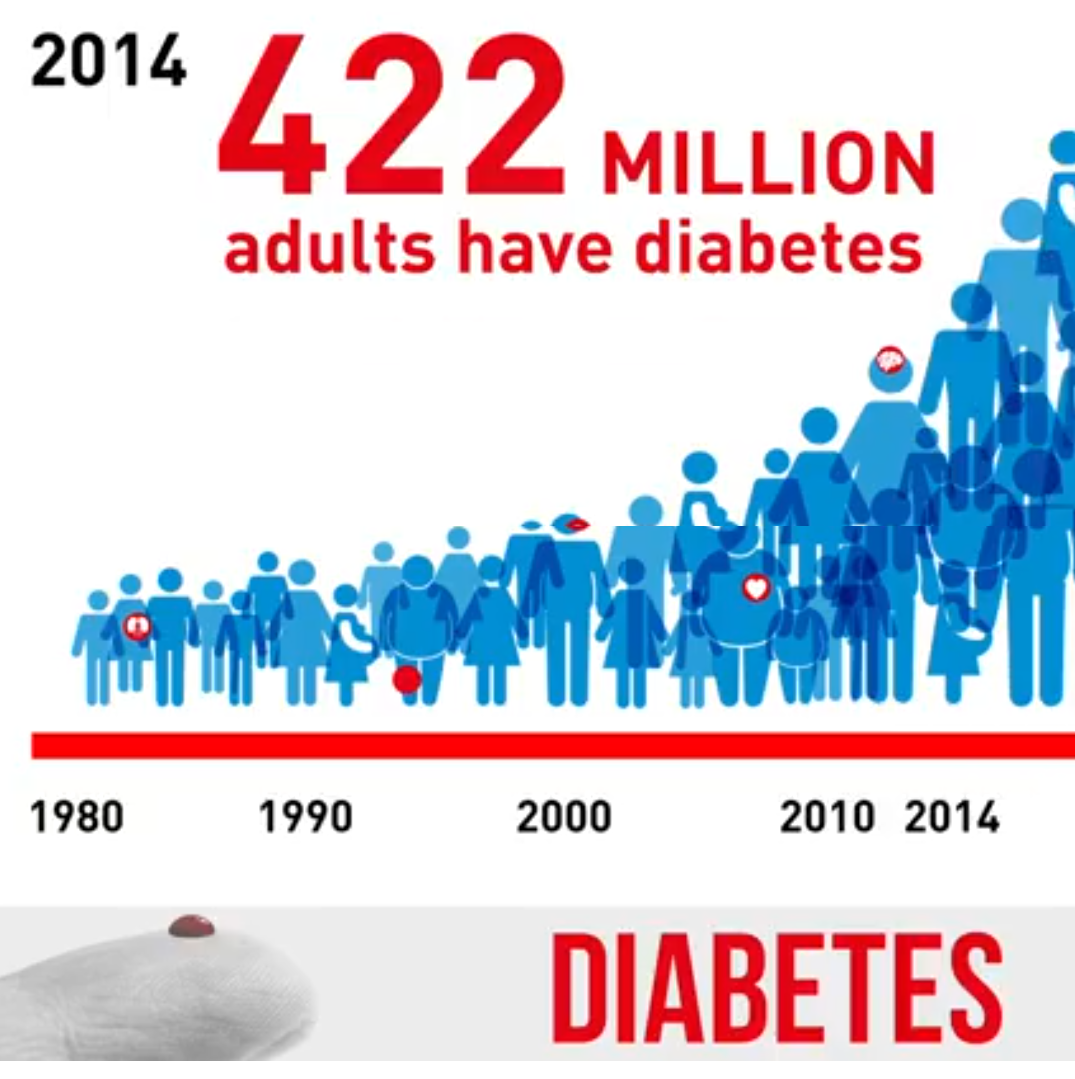
If these statistics (in the picture) from the World Health Organisation are correct, this is pretty scary and a sad indictment of the state of health policies and education around the world, and the marketing of junk foods.

Diabetes (in particular, Type 2 Diabetes) is a metabolic disorder, meaning that it is caused by diet and lifestyle choices and is COMPLETELY REVERSIBLE with scientifically proven nutrition and lifestyle changes!

Unfortunately the governments, dietitians, medical profession and junk food corporations keep pushing dietary advice that causes more people to develop diabetes, and making diabetes symptoms worse. Just look at the food pyramid (see my article on this recently on this page) and government dietary guidelines which say to eat 45-65% of your food intake as carbohydrates!
Carbohydrates in your body (such as sugar, whole grains, alcohol, breads, pasta, soft drinks, fruit juices and more) are quickly broken down into glucose (ie, sugar) which causes a high blood sugar spike - which is toxic to your body, as it's effectively diabetes. Your body responds to this high blood glucose by secreting a lot of insulin, a hormone which tells your body's cells to take in the high blood sugar, and also to store the excess blood sugar into body fat stores.
The resulting quick clearing of blood sugar then causes low blood sugar levels, so you feel hungry, have mood swings, and get cravings for another quick "hit" of carbohydrate (ie sugar) again and the cycle continues. Eventually your poor pancreas (the organ that produces insulin) becomes so overworked and unable to keep producing enough insulin quickly enough for all the carbohydrates you eat, that its function slows and your blood sugars remain at very high toxic levels for longer.
Constant high blood sugar levels also cause your body's cells to start to ignore the signals of insulin - as if it was a false signal. Your body is now "immune" or resistant to the effects of insulin, so your blood glucose levels remain at very toxic high levels.
If type 2 diabetes is not treated or reversed with dietary and lifestyle improvements, high blood sugar levels cause a lot of inflammation and damage in the body, in blood vessels, the liver, kidneys and many other organs, and can lead to atherosclerosis, heart disease, kidney damage, nerve damage, eye damage and more, and can even lead to death.
In short, a diet high in carbohydrates (sugar, whole grain products, and alcohol being the worst) cause weight gain, insulin resistance and type 2 diabetes. Dietary recommendations that continue to recommend high carbohydrate diets for everyone are causing this epidemic in diabetes and obesity!
What should you eat instead? That's whole new topic! Or just contact me for a personalised consultation to help you with the correct and proven advice to lose weight, reverse type 2 diabetes, and be healthier!

Picture
0 Comments

    COPYRIGHT

    All articles here are Copyright (c) to Ross Walter Nutritionist & Naturopath (2015-2022). You are welcome to share these articles in your personal or business marketing, in full and referencing this website.
    If you wish to have specific health articles written for your business, please ask via email to [email protected]  

    Archives

    January 2026
    December 2025
    July 2025
    March 2025
    September 2024
    May 2023
    April 2023
    February 2023
    November 2022
    September 2022
    June 2022
    April 2022
    March 2022
    June 2021
    May 2021
    April 2021
    March 2021
    February 2021
    December 2020
    October 2020
    August 2020
    July 2020
    June 2020
    May 2020
    April 2020
    March 2020
    February 2020
    January 2020
    December 2019
    November 2019
    September 2019
    July 2019
    June 2019
    April 2019
    March 2019
    February 2019
    January 2019
    December 2018
    November 2018
    October 2018
    August 2018
    July 2018
    June 2018
    May 2018
    April 2018
    March 2018
    February 2018
    January 2018
    December 2017
    November 2017
    October 2017
    August 2017
    July 2017
    May 2017
    March 2017
    January 2017
    December 2016
    November 2016
    October 2016
    September 2016
    August 2016
    July 2016
    June 2016
    May 2016
    April 2016
    March 2016
    February 2016
    January 2016
    December 2015
    November 2015
    October 2015
    September 2015
    August 2015
    June 2015
    April 2015
    March 2015
    February 2015

    Categories

    All
    5:2 Diet
    Acidity
    Acne
    Acrylamide
    ADHD
    ADHD Medications
    ADHD Treatments
    Aged Care Home
    AIDS
    Alcohol
    Alkaline Food
    Allergies
    Aluminium
    Alzheimer's
    Anaemia
    Antibacterial
    Antibiotics
    Anti Inflammatories
    Anti-inflammatories
    Anxiety
    Aromatherapy
    Arsenic
    Artificial Sweeteners
    Atherosclerosis
    Autism
    Autoimmune Conditions
    Baby Powder
    Baking Soda
    Banned By Facebook
    Bipolar Disorder
    Blending
    Blood Clots
    Blood Glucose
    Blood Sugar
    Body Autonomy
    Bone Density
    Bowel Movement
    Bowels
    BPA Free Plastic
    BPA-free Plastic
    BPA Plastic
    BPS Plastic
    Burns
    Cacao
    Calcium
    Calories
    Cancer
    Cancer Education
    Cancer In Children
    Cancer Prevention
    Cancer Treatments
    Cannabis
    Carb Adapted
    Carbohydrates
    Carcinogens
    Causes
    Celebrity
    Censorship
    Cervical Cancer
    Chemicals
    Children's Health
    Chocolate
    Cholesterol
    Chronic Disease
    Chronic Fatigue
    Chronic Inflammation
    CICO
    Climate Change
    Clinical Trials
    Codeine
    Coeliac Disease
    Coffee
    Cold And Flu Prevention
    Common Cold
    Constipation
    Contraception
    Cooking
    Cookware
    Coronavirus
    Coronavirus Lockdowns
    Coronavirus Research
    Coronavirus Statistics
    Coronavirus Testing
    Coronavirus Tracking
    Coronavirus Vaccines
    Corporate Sponsorship
    COVID 19
    COVID-19
    COVID 19 Testing
    COVID-19 Testing
    COVID 19 Vaccine
    COVID-19 Vaccine
    COVID 19 Vax Issues
    COVID-19 Vax Issues
    Cravings
    DAA
    Dairy
    Dental Health
    Depression
    Detox
    Diabetes
    Dieting
    Dietitian
    Dietitians
    Digestive System
    Documentary Review
    Drug Regulators
    EAT Lancet Diet
    EAT-Lancet Diet
    EBV
    Eczema
    Eggs
    E Health
    E-health
    Elderly
    Endocrine Disruptors
    Endometriosis
    Endorsements
    Energy
    Enlarged Prostate
    Environmental Health
    Environmental Toxins
    Epstein-Barr Virus
    Essential Nutrients
    Essential Oils
    Evidence Based
    Exercise
    Farming
    Fast Food
    Fasting
    Fat Adapted
    Fatigue
    Fats
    Female Health
    Female Hormones
    Fermentation
    Fermented Foods
    Fertility
    Fibre
    Fibroids
    Fibromyalgia
    Film Review
    Fish Oil
    Fitness
    Flu
    Fluoride
    Flu Vaccine
    Folate
    Folic Acid
    Food Additives
    Food Allergies
    Food Containters
    Food Guidelines
    Food Industry
    Food Ingredients
    Food Intake
    Food Intolerances
    Food Labelling
    Food Labels
    Food Production
    Food Pyramid
    Food Sensitivities
    Food Star Rating
    Fracking
    Fructose
    Gardasil Vaccine
    Genetically Modified Foods
    Genetic Modification
    Genetics
    Genocide
    Germ Theory
    Glandular Fever
    Global Warming
    GLP-1 Medications
    Glucose
    Gluten
    Gluten Free Food
    Gluten-free Food
    Glyphosate
    GMO
    Goals
    Government
    Grains
    Gut Bacteria
    Gut-brain Connection
    Gut Health
    Hand Washing
    Health Funds
    Health Information
    Health Insurance
    Health Myths
    Health Policy
    Health Star Ratings
    Health Statistics
    Healthy Fats
    Heartburn
    Heart Disease
    Heart Health
    Heavy Metals
    Herd Immunity
    High Blood Pressure
    HIV
    Hormonal Issues
    Hormone Disrupting
    Hormones
    HPV
    HPV Vaccine
    Hydroxychloroquine HCQ
    Hygiene
    Hypoxia
    IBS
    Immune Suppressives
    Immune System
    Indigestion
    Infections
    Infertility
    Inflammation
    Influenza
    Informed Consent
    Insomnia
    Insulin
    Iron Deficiency
    Irritable Bowel
    Juicing
    Ketogenic Diet
    LCHF
    Leaky Gut
    Liver
    Low Carb Diet
    Low Fat Diets
    Low GI
    Lung Disease
    Macronutrients
    Man Flu
    Manuka Honey
    Margarine
    Marketing
    Masks
    Meal Replacements
    Measles
    Meat
    Medical Corruption
    Medical Privacy
    Medical Records
    Medical Science
    Medical Testing
    Medications
    Medicinal Cannabis
    Melanoma
    Melatonin
    Men's Health
    Mental Health
    Mental Illness
    Microbiome
    Microwave Meals
    Microwaves
    Miscarriage
    MMR Vaccine
    Moderation
    Modern Diets
    Modern Medicine
    Monkeypox
    Motivation
    MRNA Vaccines
    MTHFR
    My Health Record
    Natural Therapies
    Naturopathy
    Nerve Damage
    Neuropathy
    New Years Resolutions
    NSAIDs
    Nursing Home
    Nutrient Deficiencies
    Nutrients
    Nutrient Toxicity
    Nutrigenomics
    Nutrition
    Nutritional Medicine
    Nutrition Guidelines
    Nutritionist
    Nutrition Research
    Obesity
    Oestrogen
    Oil
    Omega-3
    One World Diet
    Osteoporosis
    Oxidative Damage
    Pain
    Painkillers
    Paleo
    Pandemic
    Pap Smears
    Pathology Testing
    PCOS
    PCR Testing
    Personalised Consultations
    Pet Foods
    Pets
    Pharmaceuticals
    PH Of Food
    Plant Based Diets
    Plant-based Diets
    Plastic
    Plastic Bottles
    PMDD
    PMS
    Polio
    Polyunsaturated Fats
    Poo
    Population Growth
    POTS
    PPI
    Preconception
    Pregnancy
    Primal
    Privacy
    Probiotics
    Processed Foods
    Psoriasis
    Pyrrole Disorder
    Red Meat
    Red Wine
    Reflux
    Research
    Respiratory Infections
    Resveratrol
    Reviews
    Rice
    Root Cause Analysis
    Root Causes
    Roundup
    Salt
    SARS
    Saturated Fat
    Schizophrenia
    Scientific Evidence
    Scientific Research
    SIBO
    Skin
    Skin Cancer
    Skin Conditions
    Sleep
    Smallpox
    Sore Throat
    Soy
    Soy Products
    Spike Protein
    Sports
    Sports Nutrition
    Spring
    Statistics
    Stevia
    Stomach Function
    Stress
    Sugar
    Sunburn
    Sunglasses
    Sunlight
    Sun Safe
    Sunscreens
    Talcum Powder
    TGA
    The Medical Model
    Thyroid
    Tonsillitis
    Tooth Decay
    Toxicity
    Toxins And Chemicals
    Treat The Causes
    Treat The Whole Body
    Type 1 Diabetes
    Type 2 Diabetes
    Ulcers
    Vaccination
    Vaccine Adverse Events
    Vaccine Passports
    Vaccine Research
    Vaccines
    Vaccine Safety
    Vaccine Testing
    Vegan
    Vegetables
    Viral Infections
    Virus
    Vitamin C
    Vitamin D
    Water
    Water Fluoridation
    Weight Gain
    Weight Loss
    Wheat
    Whole Grains
    Winter
    Winter Health
    Womens Health
    Would Healing
    Xenoestrogens
    Xeno-oestrogens
    Zinc

    RSS Feed

Proudly powered by Weebly